
How to Write a Job Safety Analysis (JSA): The Ultimate Step-by-Step Guide
✅ Introduction: The Map Before the Journey
In the world of Indian industry—whether you are managing a construction site in Mumbai or a chemical plant in Gujarat—every task carries a risk. A Job Safety Analysis (JSA) is essentially your "safety map." It is a systematic process that breaks down a job into its individual steps to find hazards before an accident happens.
The Humanoid Truth: Most supervisors see the JSA as "just another form" to fill out for the safety department. We often treat it as a box-ticking exercise. But the truth is, a well-written JSA is the only thing that stands between a routine task and a front-page tragedy.
👉🏻 The Goal: To provide a clear, "no-nonsense" framework for creating JSAs that actually work on the shop floor, ensuring every worker returns home safely.
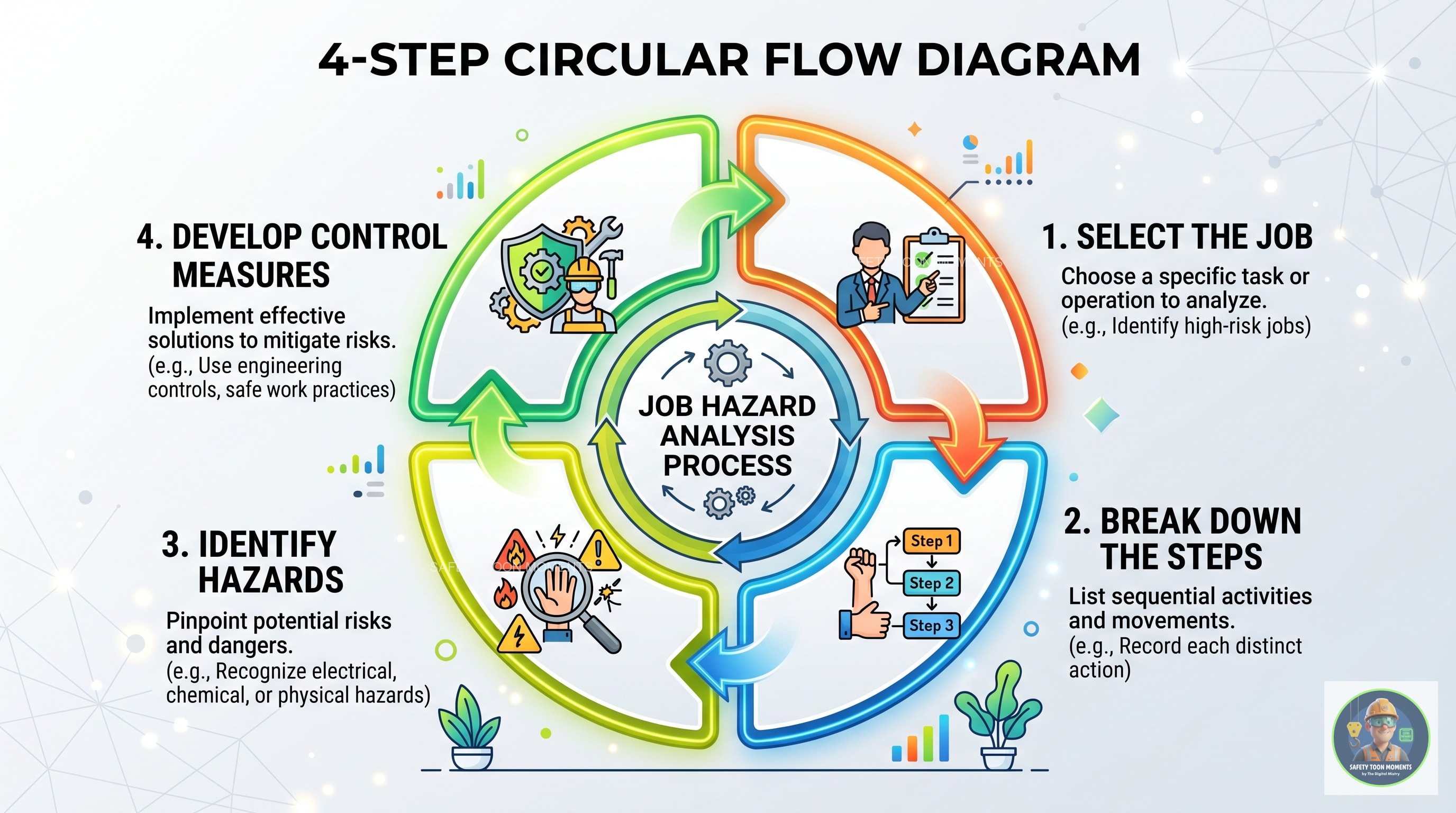
✅ 1. Step 1: Selecting the Job for Analysis
You cannot write a JSA for every single movement in a factory. You must prioritize.
- 👉🏻 High-Injury Frequency: Any job where accidents have happened before.
- 👉🏻 High-Severity Potential: Jobs that could lead to a permanent disability or fatality (e.g., working at heights or with high-voltage electricity).
- 👉🏻 New or Modified Jobs: Whenever you install a new CNC machine or change a chemical process.
- 👉🏻 Infrequent Tasks: Maintenance work that happens only once a year.
✅ 2. Step 2: Breaking the Job into Steps
This is where most people fail. A JSA should not be too broad, nor too detailed.
- 👉🏻 The Rule of Ten: Ideally, a JSA should have between 5 to 10 steps. If you have 20 steps, the job is too complex and should be broken into two JSAs.
- 👉🏻 Action-Oriented Language: Start each step with a verb.
- 👉🏻 Example: "Lift the steel plate" instead of "The plate is lifted."
Observe the Expert: Don't write the JSA from an office. Stand on the shop floor and watch an experienced worker perform the task.
✅ 3. Step 3: Identifying the Hazards (The "What If?" Stage)
For every step identified, ask yourself: "What could go wrong here?"
- 👉🏻 Caught-In/Between: Can a hand get caught in gears?
- 👉🏻 Struck-By: Can a falling tool hit a passerby?
- 👉🏻 Falls: Is the floor oily or the ladder unstable?
- 👉🏻 Chemical/Fume Exposure: Are there toxic vapors being released?
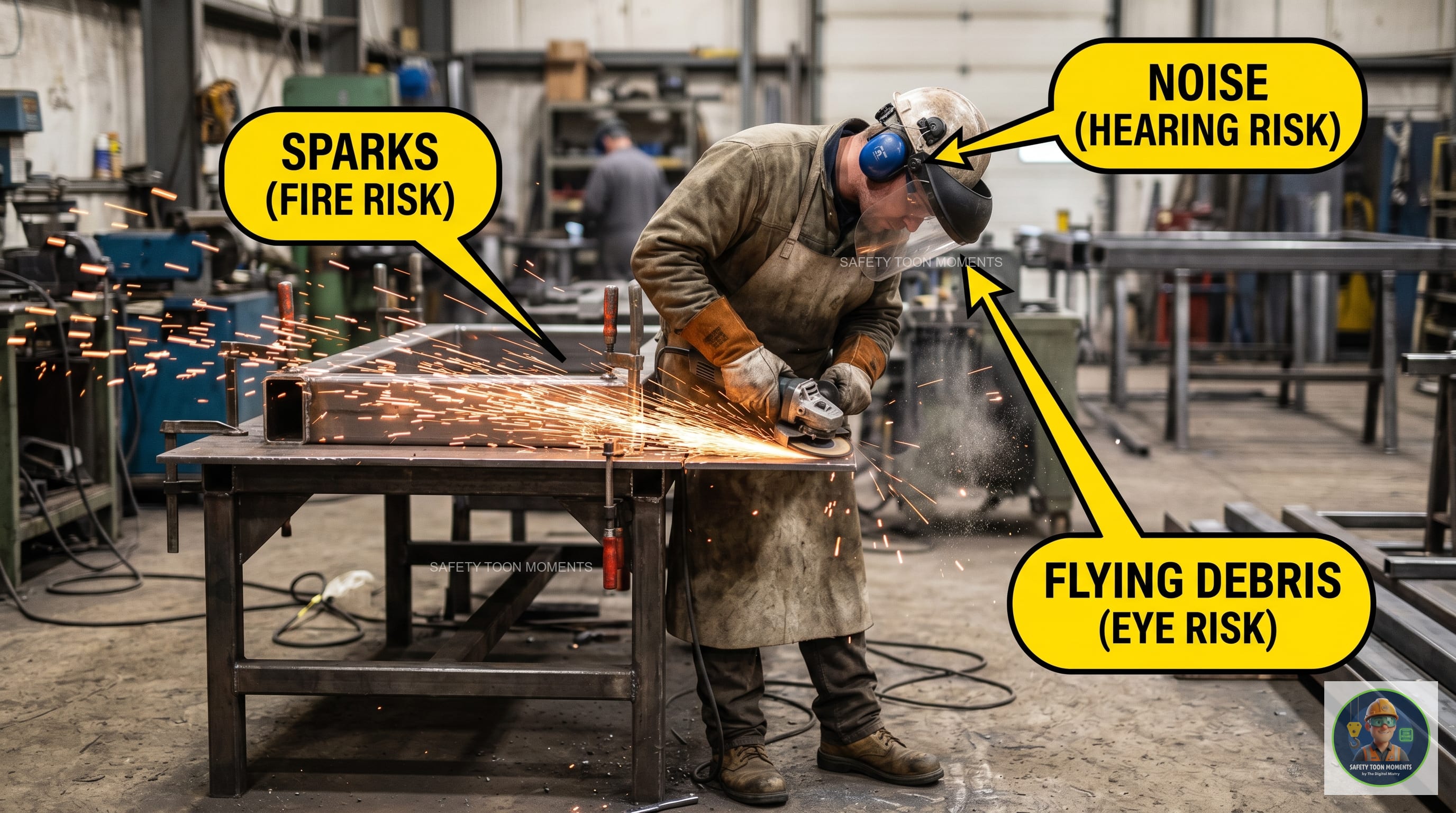
✅ 4. Step 4: Developing Control Measures
Now that you know the danger, how do you stop it? We follow the Hierarchy of Controls:
-
- Elimination: Can we remove the hazard entirely? (e.g., using a robot).
-
- Substitution: Can we use a less toxic chemical?
-
- Engineering Controls: Can we add a guard or a suction arm?
-
- Administrative Controls: Changing the SOP (Standard Operating Procedure) or adding warning signs.
-
- PPE: The last resort. Gloves, goggles, and helmets.
✅ 5. Indian Legal Shield: The JSA Requirement
In India, while the term "JSA" might not be in every specific rule, the concept is legally mandated through various acts:
- 👉🏻 The Factories Act, 1948 - Section 7A: This section places a "General Duty" on the occupier to provide and maintain a system of work that is safe and without risks to health. A JSA is the primary tool used to prove compliance with this section.
- 👉🏻 Section 41-B: Compulsory disclosure of information regarding hazardous processes. A JSA acts as this disclosure for the workers.
- 👉🏻 IS 15656: The Indian Standard for Hazard Identification and Risk Assessment (HIRA). A JSA is a vital component of a larger HIRA study.
✅ 6. Technical FAQ: Common JSA Queries
👉🏻 Q: What is the difference between a JSA and a HIRA?
- Answer: A JSA focuses on a specific task performed by a worker (step-by-step). A HIRA (Hazard Identification and Risk Assessment) is a broader study of an entire facility or department.
👉🏻 Q: Who should write the JSA?
- Answer: It should be a collaborative effort between the Site Supervisor, the Safety Officer, and the Worker performing the job. The worker knows the "hidden" dangers best.
👉🏻 Q: How often should a JSA be reviewed?
- Answer: At least once a year, or immediately after a "Near Miss" or an accident occurs during that specific task.
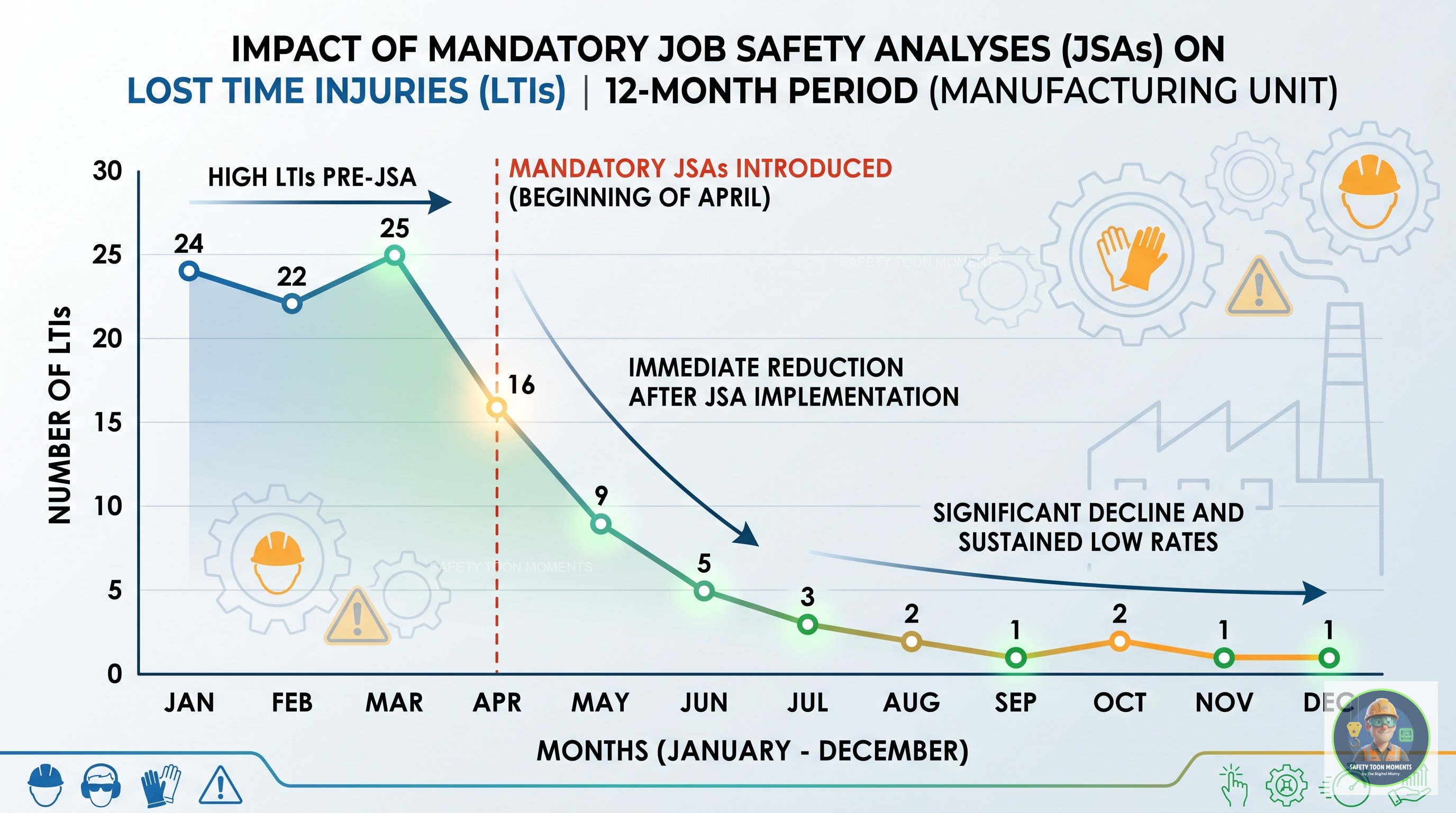
✅ 7. Best Practices / JSA Checklist
Be Specific: Don't just say "Wear PPE." Say "Wear Grade 5 Cut-Resistant Nitrile Gloves."
- 👉🏻 Use Photos: A JSA with photos of the actual machine is 10x more effective than one with just text.
- 👉🏻 Communicate: The best JSA is useless if it sits in a drawer. Discuss it during the "Toolbox Talk" before the shift starts.
- 👉🏻 Sign-Off: Every worker involved in the task should sign the JSA to confirm they understand the risks and the controls.
- 👉🏻 Language: In India, ensure the JSA summary is explained in the local language (Hindi, Marathi, Telugu, etc.) so that the "Humanoid" worker truly understands it.
🎯 Conclusion: The Foundation of a Safe Shift
A Job Safety Analysis is not a burden; it is a blueprint for survival. By respecting the Section 7A of the Factories Act and following the IS 15656 guidelines, we create a workplace where "chance" and "luck" are replaced by "planning" and "protection."
Don't start the job until you've finished the analysis. Your life depends on it.