Hot Work and Fire Safety
The Spark that Ends a Business: Hot Work Permits & Fire Prevention (Comprehensive Guide)
✅ Introduction: The Cost of a Single Spark
In a fabrication shop, we play with fire every day. Whether it’s the 3000°C arc of a TIG welder or the stream of orange sparks from a 7-inch angle grinder, we are surrounded by ignition sources. But here is the "Humanoid Truth": because we see sparks every day, we stop fearing them. We start to treat them like harmless "fireflies."
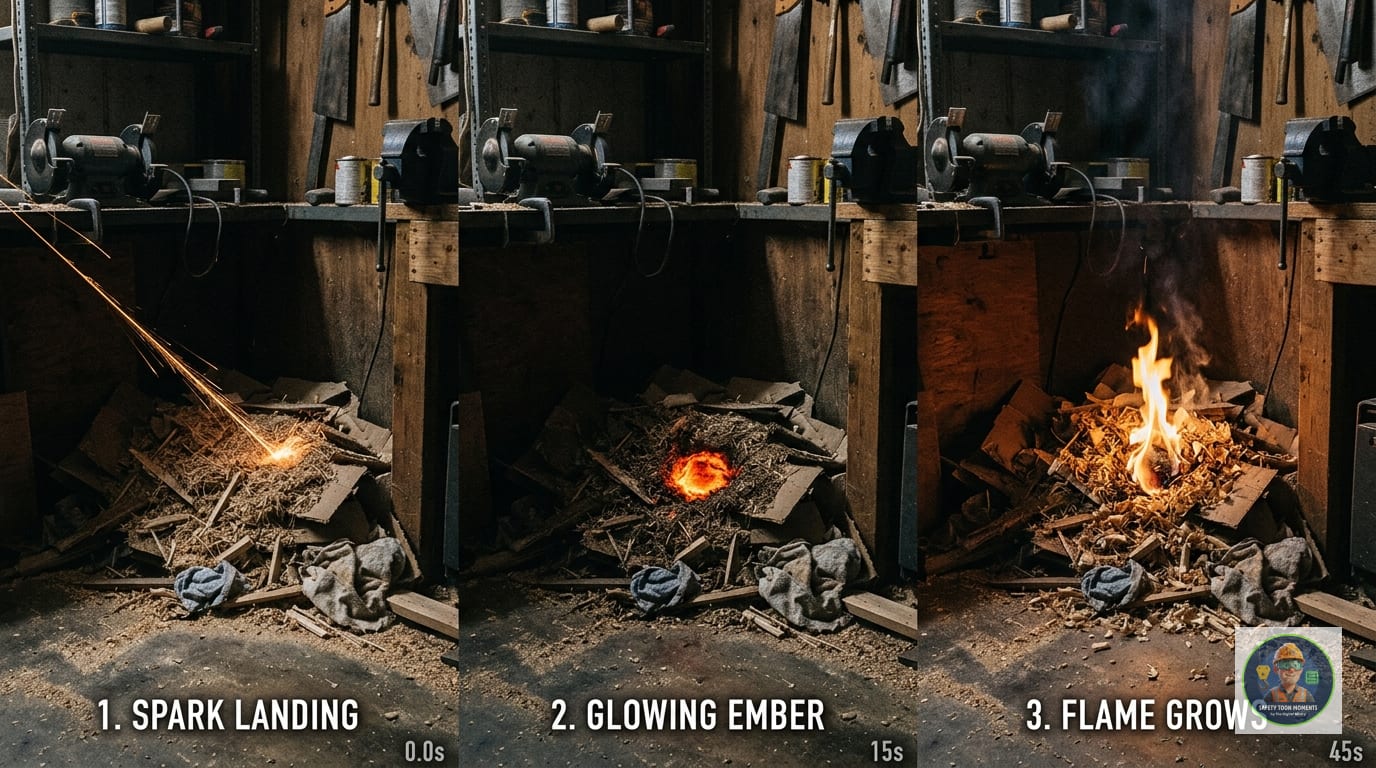
👉🏻 The Reality: A single spark can smolder in a pile of oily rags or a wooden pallet for four hours before bursting into a flame that levels a factory.
👉🏻 The Goal: To ensure that every spark is accounted for and every flame is controlled through a disciplined "Hot Work Permit" system.
✅ 1. What is "Hot Work"?
Many workers in India think "Hot Work" only means welding. In reality, it includes:
- Grinding: Throwing sparks that can travel up to 35 feet.
- Gas Cutting: Using oxygen-acetylene torches that produce molten "slag."
- Brazing and Soldering: Open flames that can ignite nearby vapors.
- Thermal Spraying: High-heat coating processes.
✅ 2. The Indian Legal Shield: Fire Protection Rules
The Indian government takes fire safety very seriously due to high-density industrial areas like those in Okhla or Peenya.
- The Factories Act, 1948 - Section 38 (Precautions in Case of Fire): This section mandates that every factory must have "practicable measures" to prevent the outbreak of fire and provide safe means of escape.
- IS 3016: This is the Indian Standard for "Code of Practice for Fire Precautions in Welding and Cutting Operations." It explicitly states that a fire watch is required if flammable materials are within 10 meters (35 feet).
- IS 2190: Selection, installation, and maintenance of first-aid fire extinguishers. If your extinguisher is "out of date," you are in violation of this standard.
✅ 3. The 35-Foot Rule (The Safety Perimeter)
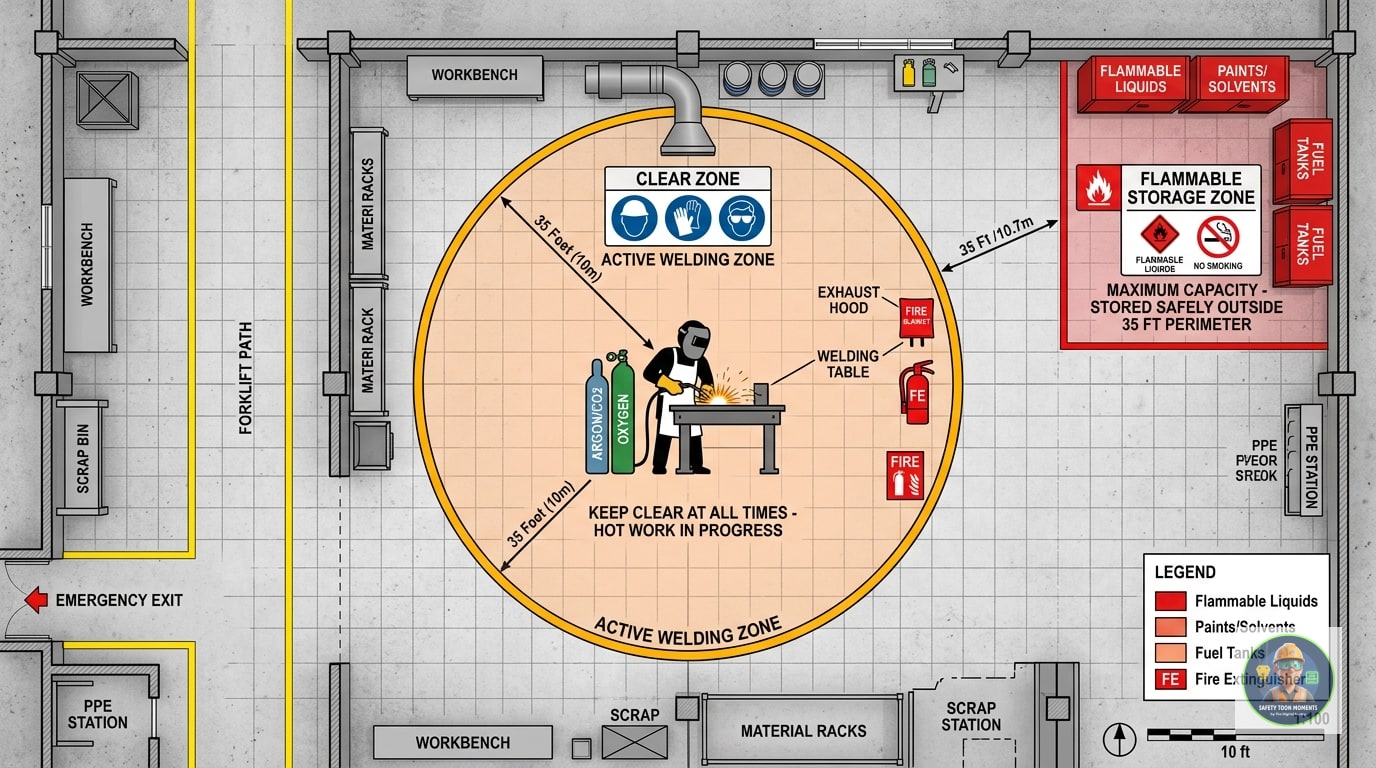
Before you strike an arc, look around. You need a "Safety Circle" with a radius of at least 35 feet (approx. 10 meters).
- Clear the Floor: Sweep up all metal shavings, dust, and paper.
- Cover the Rest: If you can't move a machine or a pile of wood, cover it with an IS 11833 certified fire-resistant blanket.
- Seal the Gaps: Sparks love to fly through cracks in the floor or holes in the wall. Seal these before starting.
✅ 4. The "Hot Work Permit": Your License to Weld
Think of a Hot Work Permit as a contract. It’s not just "more paperwork"; it’s a shared agreement that the area is safe.
- Step 1: Inspect. The safety officer and the welder walk the area together.
- Step 2: Verify. Are the extinguishers charged? Is the ventilation on? Is the "Fire Watch" ready?
- Step 3: Sign. The permit is valid only for a specific time and a specific person.
The "Humanoid" Mistake: Signing the permit from a desk without actually visiting the site. In Indian workshops, this "desk-safety" leads to tragedies.
✅ 5. The Fire Watch: The Most Important Person in the Room
- The "Fire Watch" is a dedicated person whose only job is to look for sparks.
- They don't weld.
- They don't grind.
- They watch.
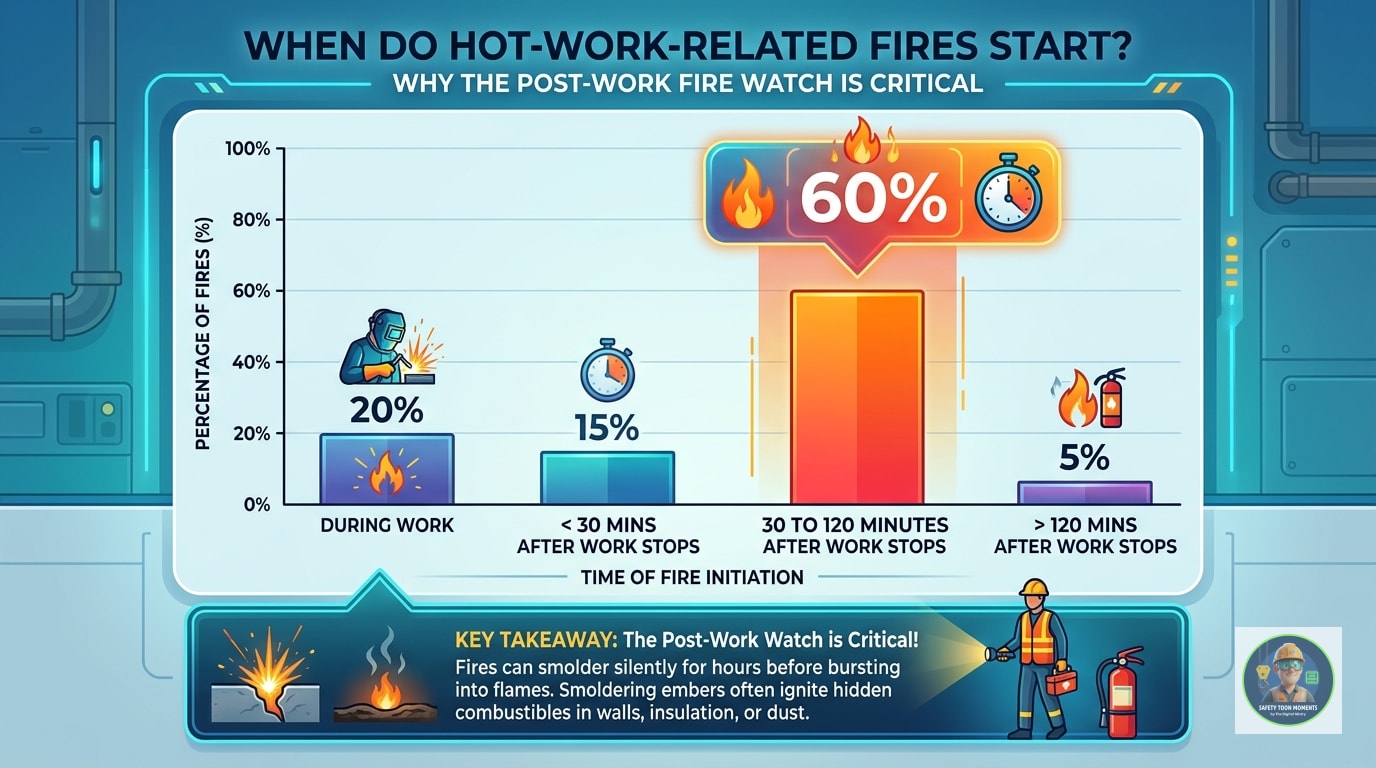
👉🏻 The 30-Minute Rule: After the welding is finished, the Fire Watch must stay at the station for at least 30 minutes to ensure no smoldering embers are hiding.
✅ 6. Fire Extinguishers: Know Your ABCs
In a fabrication shop, a bucket of water is rarely enough. You need to know which extinguisher to grab:
- Class A (Water/ABC): For paper, wood, and trash.
- Class B (CO2/Dry Chemical): For flammable liquids (oils, thinners).
- Class C (CO2/Dry Chemical): For electrical fires.
- Class D (Special Powder): Essential for metal fires (Magnesium, Aluminum dust). NEVER use water on a metal fire—it can cause an explosion.
✅ 7. Best Practices/Checklist for Workers
- Is there a valid, signed Hot Work Permit at my station?
- Is my fire extinguisher "in the green" (fully charged)?
- Are there any gas cylinders within 35 feet of my sparks?
- Have I cleared the "hidden areas" under benches and tables?
- Do I have a teammate acting as a Fire Watch?
- Is my PPE (leather apron and gloves) free of oil and grease? (Oily leather can catch fire instantly).
🎯 Conclusion: A Shared Responsibility
When a shop floor catches fire, it doesn't just damage machines; it destroys livelihoods. By respecting the Hot Work Permit and the IS 3016 standards, you aren't just following a rule—you are protecting the future of your coworkers and your company.
Don't let a "five-minute job" turn into a lifetime of regret. Control the spark.
To get the related informative documents visit to www.safetytoonmoments.com/documents